Ouzo, plain and simple
Ouzo is a clear grape-based spirit flavoured with anise and a small handful of botanicals — sometimes fennel, mastic or coriander. Pour it into a small glass, add a couple of ice cubes or a splash of cold water, and watch it turn milky white. That's the anethole essential oil coming out of solution — the famous ouzo effect.
Varvayanni from Lesvos is our reference, in all four colour codes — Green (the original), Blue (softer), Red (bolder) and Black (concentrated). Plomari is the crowd-pleaser most people already know. For something more unusual try Apalarina or Kazanisto, both distilled in traditional copper stills.
Tsipouro — the mountain cousin
Tsipouro is distilled from grape pomace — what's left of the grapes after they've been pressed for wine. In Thessaly and mainland Greece it's usually made without anise, tasting cleanly of the fruit; on Crete the same spirit is called tsikoudia or raki. It's traditionally poured at room temperature, in small shots, alongside a plate of mezedes.
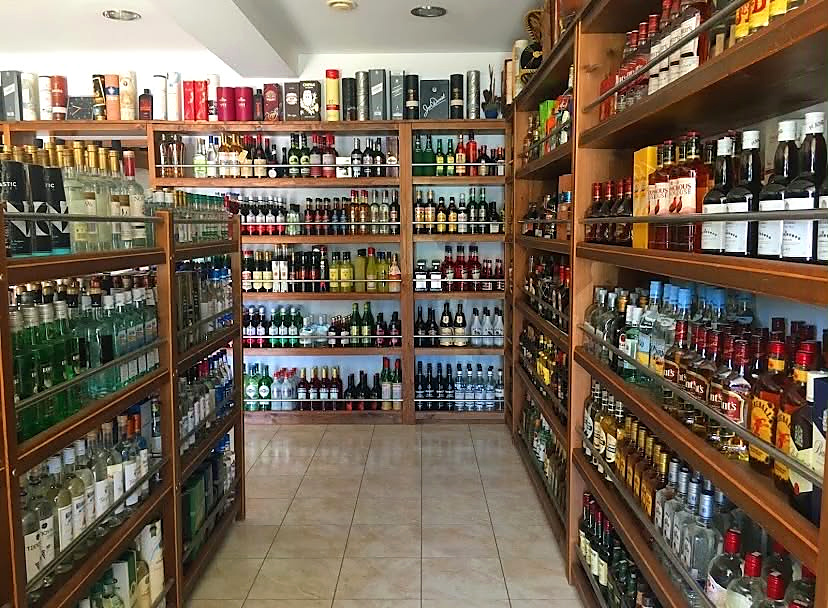
Our shelves carry Idoniko, Apostolaki, Tsililis and the widely loved Dekaraki — all clean, honest bottles from small distillers. For something to sit with after dinner, Manifesto Limited Edition 6 Years is a barrel-aged tsipouro with real depth. Ask about the anise-added versions if you want something a step closer to ouzo.
How locals drink them
Both spirits live and die on food. Grilled sardines, fried courgette, tzatziki, olives, a wedge of feta with oregano — that's the pairing. Never drink either on an empty stomach. Serve ouzo cold and diluted; serve tsipouro at room temperature and neat. If you're taking bottles home, both travel very well and are excellent, characterful gifts.